2026 Honda CR-V: Hybrid, All-Wheel Drive, and Reasonable Fuel Economy at All Times
June 30 2026,
Among all the compact SUVs sold in Canada, the Honda CR-V remains the one most frequently found in online searches in Quebec. The most common question: is it better to choose the turbocharged gas engine or the hybrid version? And does the all-wheel-drive system truly deliver on its promises in the snow? These are exactly the right questions to ask before making a purchase decision.
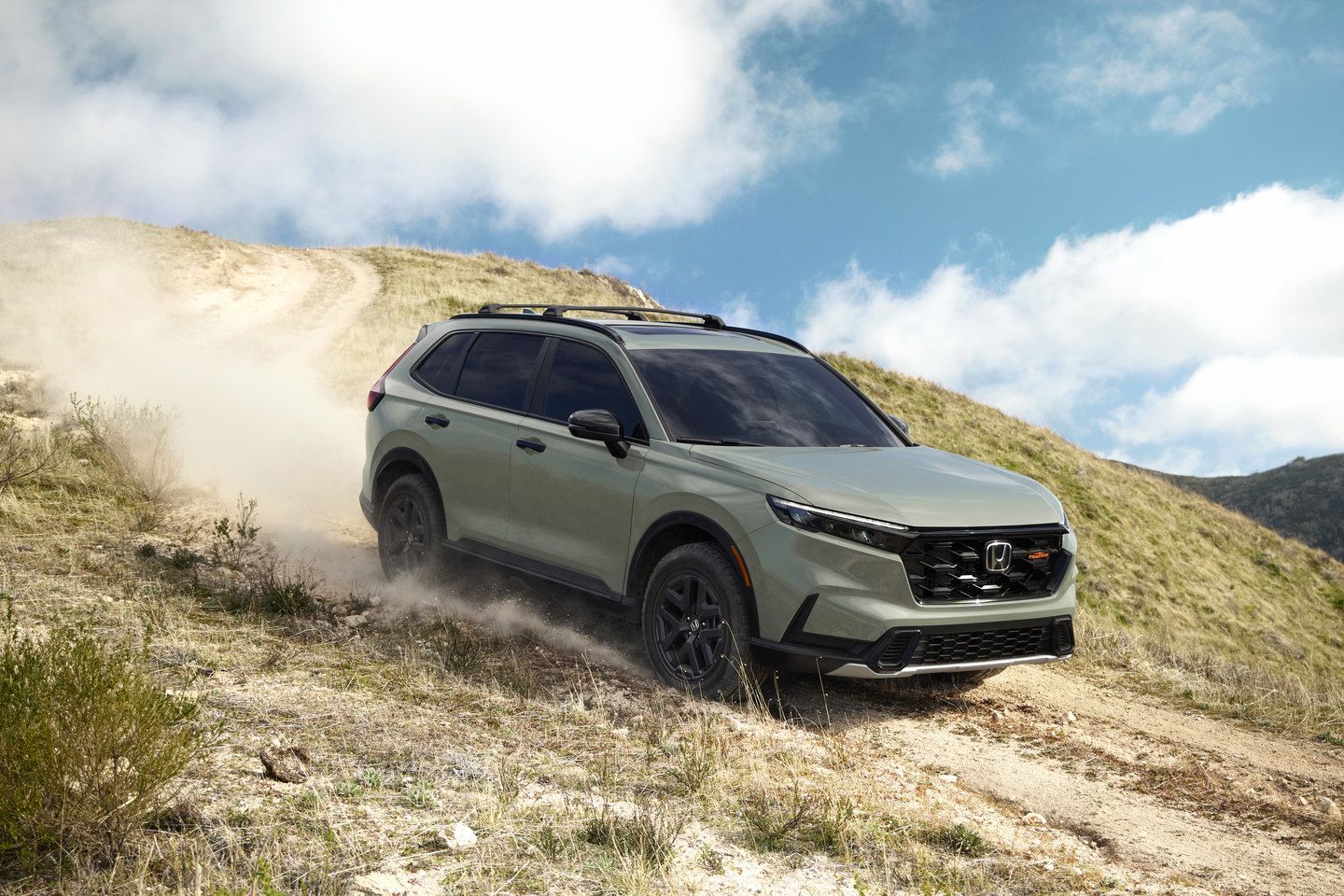
The 2026 CR-V is offered in six trims in Canada, ranging from the gas-powered LX to the Touring Hybrid, and including the new TrailSport Hybrid—a first for the CR-V lineup. All all-wheel-drive versions are compelling, and the vast majority of Quebec buyers opt for this configuration.
Gas or hybrid: What the numbers really say
The version equipped with the 1.5-liter turbocharged 4-cylinder engine produces 190 horsepower and 179 pound-feet of torque. Its fuel economy with all-wheel drive is 9.1 L/100 km in the city, 7.6 L/100 km on the highway, and 8.4 L/100 km combined. This data comes from the Canadian government's five-cycle testing protocol.
The hybrid trims rely on a 2.0-liter 4-cylinder engine paired with Honda's two-motor electric system, for a total combined output of 204 horsepower and 247 pound-feet of torque. With all-wheel drive, the combined fuel economy drops to 6.4 L/100 km. This is a difference of 2 liters per 100 km compared to the gas version, representing real and measurable savings over a year of city driving.
In Montreal, with an average annual commute of 20,000 km and fuel priced at around $1.75 per liter, the difference in consumption between the two powertrains can represent several hundred dollars in annual savings. The calculation varies depending on driving habits, but it clearly favors the hybrid for individuals who drive mostly in urban areas, such as on the Décarie Expressway or in traffic on the Champlain Bridge.
Honda all-wheel drive in winter and summer: How it works

All 2026 CR-Vs with all-wheel drive utilize the Real Time AWD system with Intelligent Control. Under normal conditions on dry or wet roads, power is sent primarily to the front wheels. As soon as sensors detect slippage or a loss of traction, the system automatically transfers torque to the rear wheels without any driver intervention.
This can happen on a dusty country road, during a day of heavy rain, etc.
For winter, all versions of the CR-V include a Snow mode among their drive settings. This mode adjusts throttle and transmission response for more progressive and controlled traction when starting off and accelerating on snow-covered or icy roads. The TrailSport Hybrid version adds enhanced off-road traction management at low speeds (under 14 km/h).
What you get based on the chosen version
| Trim | Engine | Power | Combined AWD Fuel Economy |
| LX / Sport (Gas) | 1.5L turbo 4-cyl. | 190 hp | 8.4 L/100 km |
| Sport Hybrid | 2.0L 4-cyl. + hybrid | 204 hp | 6.4 L/100 km |
| EX-L Hybrid | 2.0L 4-cyl. + hybrid | 204 hp | 6.4 L/100 km |
| TrailSport Hybrid | 2.0L 4-cyl. + hybrid | 204 hp | 6.7 L/100 km |
| Touring Hybrid | 2.0L 4-cyl. + hybrid | 204 hp | 6.4 L/100 km |
The 2026 CR-V built in Canada
All CR-V models sold in Canada are assembled at the Canadian Honda plant in Alliston, Ontario. This is a detail that matters to a good number of Quebec buyers. The CR-V is also the best-selling hybrid SUV in Canada, and hybrid variants represent more than 65% of the model's sales.
The 2026 CR-V awaits you for a test drive at Lallier Honda Montréal. Our team can guide you toward the trim that best fits your budget and your driving habits in the city or elsewhere in Quebec.