2026 Honda Odyssey vs Pilot Which Family Hauler Fits Your Summer Adventures?: Why the Honda Odyssey Is the Smarter Choice
August 17 2026,
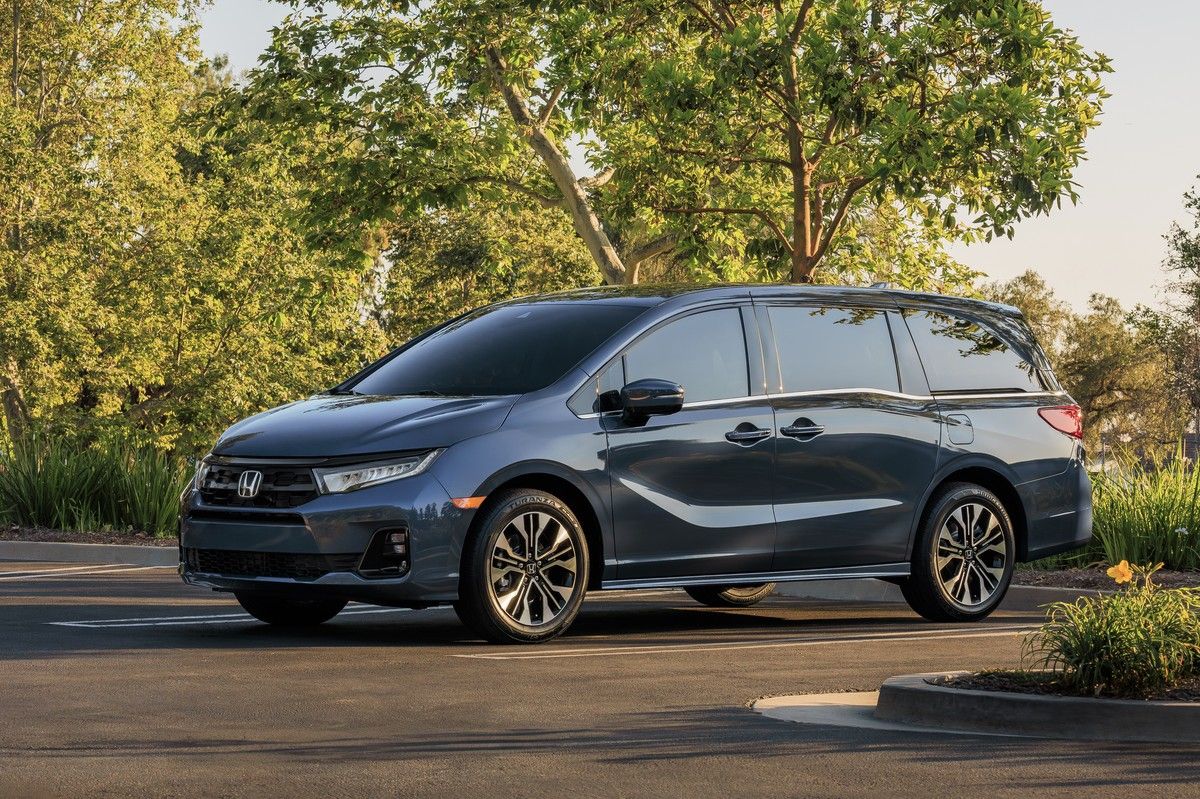
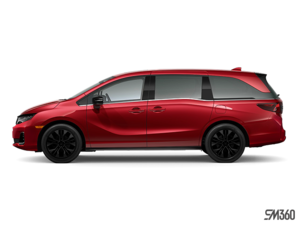
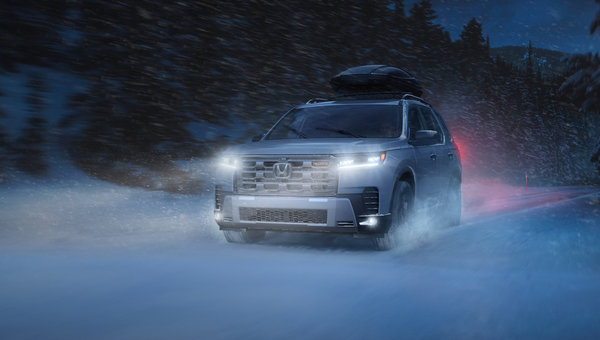
Packing two car seats, a cooler, and a week of beach gear into a vehicle before a summer road trip tests any parent’s patience. Quebec families cross-shopping three-row Hondas this season usually land on two very different shapes: the 2026 Honda Odyssey minivan and the 2026 Honda Pilot SUV.
Both seat eight passengers and share a 3.5-litre V6, but how each one loads, parks, and rides with a full family changes the story. Here is a side-by-side look at what actually matters on a Quebec summer drive.
Odyssey vs. Pilot: The Numbers Side by Side
|
Category |
Odyssey (Touring) |
Pilot (Touring) |
|
Cargo behind front seats |
3,973 L |
3,175 L |
|
Cargo behind 2nd row |
2,452 L |
1,702 L |
|
Cargo behind 3rd row |
929 L |
635 L |
|
Third-row legroom |
967 mm |
826 mm |
|
Fuel economy (combined) |
10.6 L/100 km |
11.2 L/100 km |
|
Curb weight |
2,090 kg |
2,125 kg |
|
Seating capacity |
8 |
8 |
|
Ground clearance |
148 mm |
185 mm |
|
Turning circle |
12.1 m |
11.5 m |
|
Touchscreen |
9 in |
12.3 in |
|
Drivetrain |
FWD |
AWD |
The Odyssey’s cargo hold behind the third row is nearly half again as large as the Pilot’s, and that gap grows further up front, too. The Pilot answers back with a tighter turning circle and a bigger touchscreen, points worth understanding before deciding which shape actually fits a family’s routine.
Cabin Comfort and Cargo Access for Family Trips
Row by row, the Odyssey’s minivan proportions show up most in the back seat. Third-row legroom measures 967 mm in the Odyssey, well ahead of the Pilot’s 826 mm, a gap that matters on a highway stretch with a teenager stuck in the last row for hours.
Loading the Odyssey is a different motion than loading the Pilot. Magic Slide 2nd-row seats shift side to side without needing to be removed, so a rear-facing car seat can stay installed while the middle seat slides out of the way for third-row access. The One-Motion 60/40 third-row Magic Seat folds flat with a single pull, opening up the 3,973 L of space behind the front row for bikes, coolers, or camping gear.
Power sliding doors and a programmable-height power tailgate mean a parent with an armful of beach bags does not have to swing a door wide in a tight parking spot; the doors glide open on their own track instead. The touchscreen pairs with CabinWatch, a rear-seat camera, and CabinTalk, which lets the driver speak to second- and third-row passengers through the cabin speakers without turning around.
Cabin features built for loading and managing a full car: - Magic Slide 2nd-row seats that shift sideways without full removal - One-Motion 60/40 third-row Magic Seat that folds flat in one motion - CabinWatch rear-seat camera and CabinTalk in-car PA - Power sliding doors and a programmable-height power tailgate
City Driving, Parking, and Highway Comfort

The Odyssey’s 3.5-litre V6 makes 280 hp and 262 lb-ft of torque. The Pilot’s version of the same engine makes 285 hp with an identical 262 lb-ft, routing that power through standard all-wheel drive instead of the front wheels alone.
The Pilot turns in a tighter 11.5 m circle against the Odyssey’s 12.1 m, a real edge in a cramped parking garage. But the Odyssey’s sliding doors need less side clearance to open fully than the Pilot’s swing-out doors, which matters just as much once the vehicle is actually parked between two others.
Ground clearance tells a similar story. The Pilot’s Touring trim rides 185 mm off the ground, compared with 148 mm for the Odyssey. That extra height helps on rougher trail sections, but it also means a taller step up for every car seat, stroller, and grocery bag that goes in and out of the Pilot. The Odyssey’s lower floor keeps that lift closer to waist height.
The Pilot’s standard i-VTM4 all-wheel drive sends power to whichever wheel needs it most, an advantage on slick spring rain or gravel shoulders. The Odyssey’s lighter front-drive setup helps it post a combined fuel economy of 10.6 L/100 km against the Pilot’s 11.2 L/100 km, a difference that adds up over a summer of highway kilometres.
The Pilot’s 12.3-inch touchscreen is larger than the Odyssey’s 9-inch display, a genuine upgrade in screen real estate. The Odyssey answers with CabinTalk and CabinWatch built around that smaller screen, tools aimed at managing kids in the back rather than just displaying a map.
Why the Odyssey Fits Quebec Family Life
SUV styling and standard all-wheel drive make the Pilot a familiar shape for three-row shopping, but those strengths answer a different question than the one most family routines ask day to day.
For loading gear, managing car seats, and getting three rows of passengers in and out at a rest stop, the Odyssey’s minivan layout answers those needs more directly. The lower step-in height, the sliding doors, and the 929 L of space behind the third row make the everyday parts of a family road trip easier, from the driveway to the final parking spot.
The Odyssey’s fuel economy advantage and larger cargo hold behind every row give it the edge for the way most Quebec families actually use a three-row vehicle: full of kids, full of bags, and headed somewhere for the weekend.
Test-Drive the 2026 Honda Odyssey at Lallier Honda Montréal
The 2026 Honda Odyssey pairs minivan practicality with a 3.5-litre V6, sliding doors, and a cargo hold built for gear-heavy family trips. Its lower step-in height and CabinWatch and CabinTalk features are built around the reality of traveling with kids.
Visit Lallier Honda Montréal to sit in the Odyssey’s second and third rows, try the sliding doors in a tight spot, and load your own stroller or cooler before deciding what fits your family this summer.