Living in Montreal Without an SUV: It’s Possible with the Right Honda
October 28 2026,
Narrow Plateau streets, parallel parking in Rosemont, and snow-packed alleys in February: driving in Montreal comes with its own set of rules. Yet many drivers buy vehicles larger than their actual needs dictate, out of habit or fear of running short on space.
At Honda, three models adapt well to urban demands without feeling oversized downtown: the Civic, the HR-V, and the CR-V. Before deciding, it pays to compare their dimensions, cargo volume, and fuel economy. A few numbers may surprise you.
Overall Length: A Closer Call Than You Think
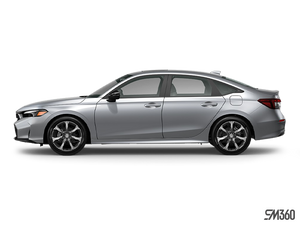
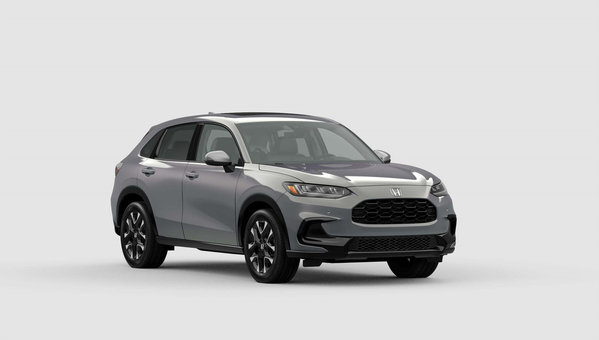
People often associate SUVs with bulk. However, the Civic sedan measures 4,694 mm in length, and the CR-V measures 4,695 mm. For curb-side parallel parking, the difference is practically zero. The HR-V is the shortest of the three at 4,568 mm—roughly 13 cm shorter.
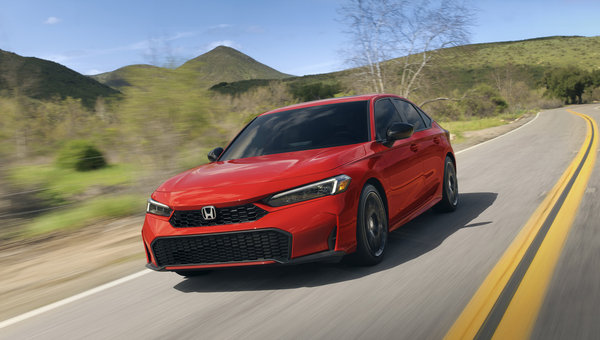
The real difference lies in vehicle height and driving position. The Civic measures 1,415 mm tall, the HR-V 1,620 mm, and the CR-V 1,690 mm. A higher seating position helps you see over parked cars at intersections, a noticeable advantage in city driving. The lower-slung Civic, by contrast, delivers a road-hugging feel and a lower center of gravity.
| Model | Length | Height | Cargo Space | Combined Consumption |
| Civic Sedan LX | 4,694 mm | 1,415 mm | 419 L (trunk) | 6.7 L/100 km |
| Civic Sedan Sport Hybrid | 4,694 mm | 1,415 mm | 419 L (trunk) | 4.9 L/100 km |
| HR-V AWD | 4,568 mm | 1,620 mm | 691 L / 1,559 L | 8.7 L/100 km |
| CR-V Hybrid | 4,695 mm | 1,690 mm | 1,028 L / 2,030 L | 6.4 L/100 km |
For SUVs, the first cargo figure indicates capacity with rear seats up; the second is with seats folded.
Fuel consumption varies far more than exterior length. Between the Civic Hybrid and the all-wheel-drive (gas-only) HR-V, the difference in combined ratings reaches 3.8 L/100 km. For a vehicle used primarily for short urban trips, that difference outweighs a few centimeters of sheet metal.
The Civic: For Those Who Travel Light

The Civic is an ideal match for solo drivers, couples, and small families who rarely carry bulky cargo. Its 419-litre trunk handles groceries and weekend bags with ease. The hybrid version delivers the lowest combined consumption of the group, with official city ratings (4.7 L/100 km) proving even lower than its highway rating (5.1 L/100 km). For added versatility without upsizing, the Civic Hatchback provides a wider cargo hatch opening.
The Civic is front-wheel-drive only, making a dedicated set of quality winter tires essential on side streets where plowing can lag.
The HR-V: The Compact Compromise
The HR-V is the shortest of the three, offering 691 liters of cargo room behind the rear seats and 1,559 liters once folded. Its 2.0-liter 4-cylinder engine generates 158 horsepower and 138 lb-ft of torque, with all-wheel drive available. It is a solid pick for drivers who want a higher seating position and more generous ground clearance (up to 185 mm) to clear snowbanks left by city plows. Its combined consumption of 8.7 L/100 km with AWD is, however, the highest of the group.
The CR-V: When Space Becomes a Must
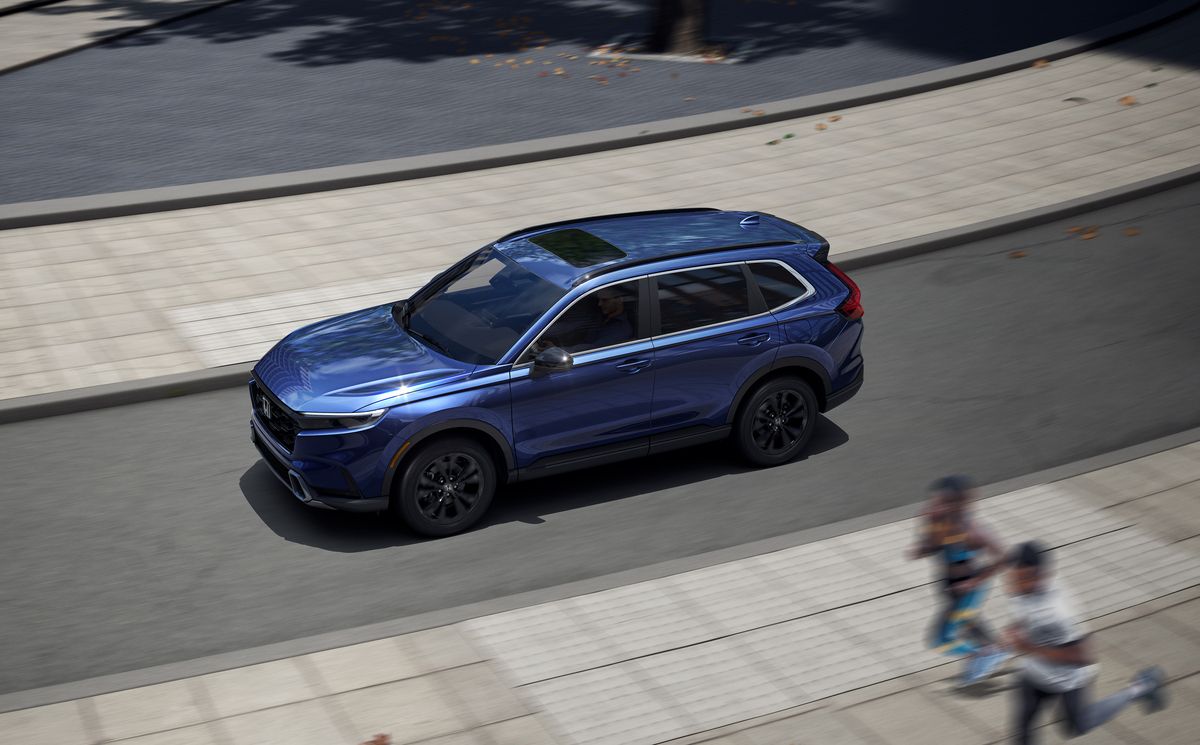
The CR-V proves its worth when its capacity is regularly utilized: strollers, hockey bags, bikes, or frequent getaways to the Laurentians and Eastern Townships. In hybrid guise, it offers 1,028 liters behind the rear bench and 2,030 liters with the seats down, returning a combined rating of 6.4 L/100 km. That powertrain puts out 204 horsepower and 247 lb-ft of torque, and all hybrid trims come standard with all-wheel drive. The gas-powered CR-V, powered by a 1.5-liter turbocharged 4-cylinder, provides slightly more cargo room (1,113 liters behind the bench), but its combined rating rises to 8.4 L/100 km with AWD.
Because its overall length is nearly identical to the Civic's, it remains maneuverable around town. Its extra height and overall profile do require a bit more attention inside underground garages and tight laneways.
Three Questions to Ask Before Deciding

-
How many times a month do I truly need maximum cargo space?
-
Do I park in an indoor garage, or primarily on the street?
-
Are my trips mostly local city runs, or highway getaways on weekends?
Paying for a vehicle larger than you need often leads to higher fuel consumption and an everyday footprint that is harder to manage. Conversely, a vehicle that is too small quickly becomes frustrating. The right fit sits squarely in between and varies for every household.
All three vehicles make compelling cases, but each serves different needs. We invite you to explore them in person and consult with our specialists.
The advisors at Lallier Honda Montreal can arrange back-to-back city test drives in the Civic, HR-V, and CR-V, allowing you to directly evaluate visibility and parking ease. Stop by whenever your schedule permits.